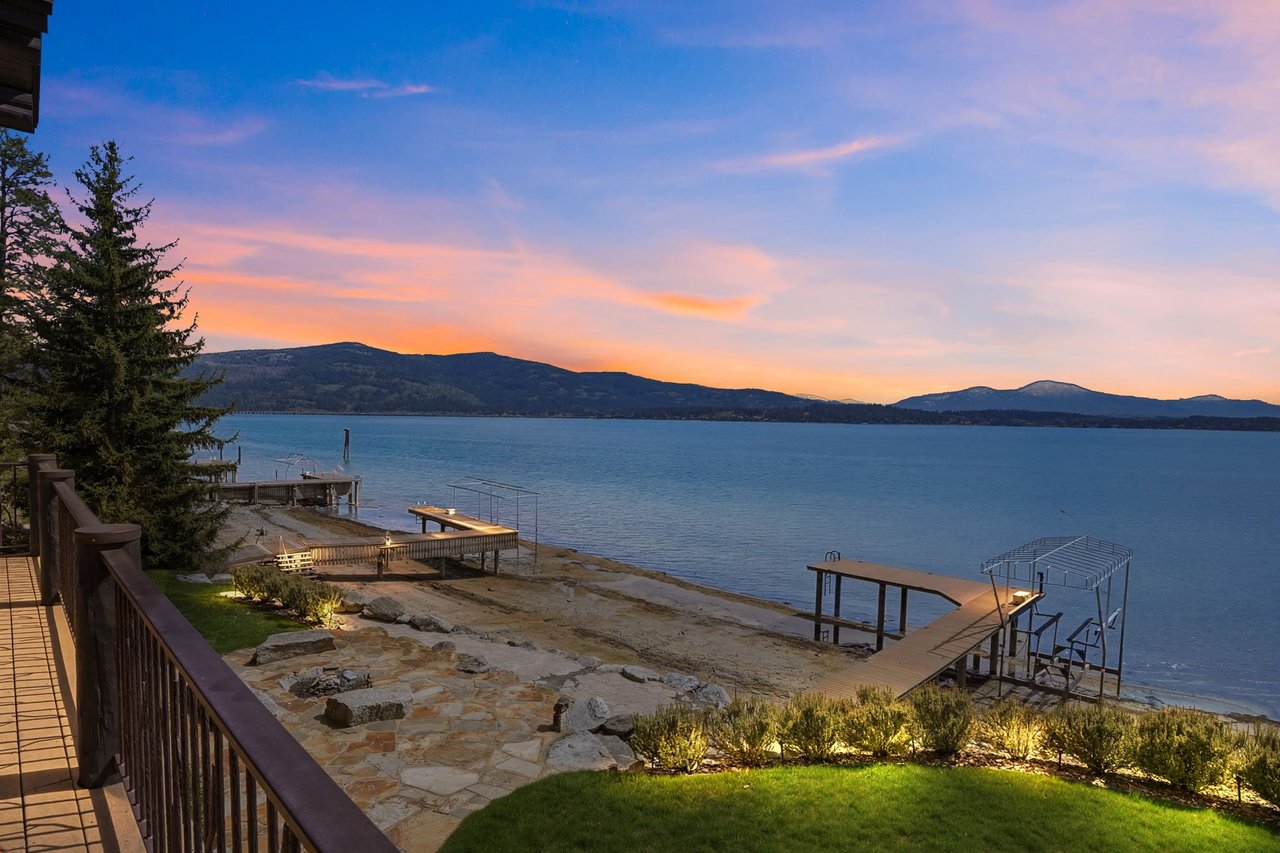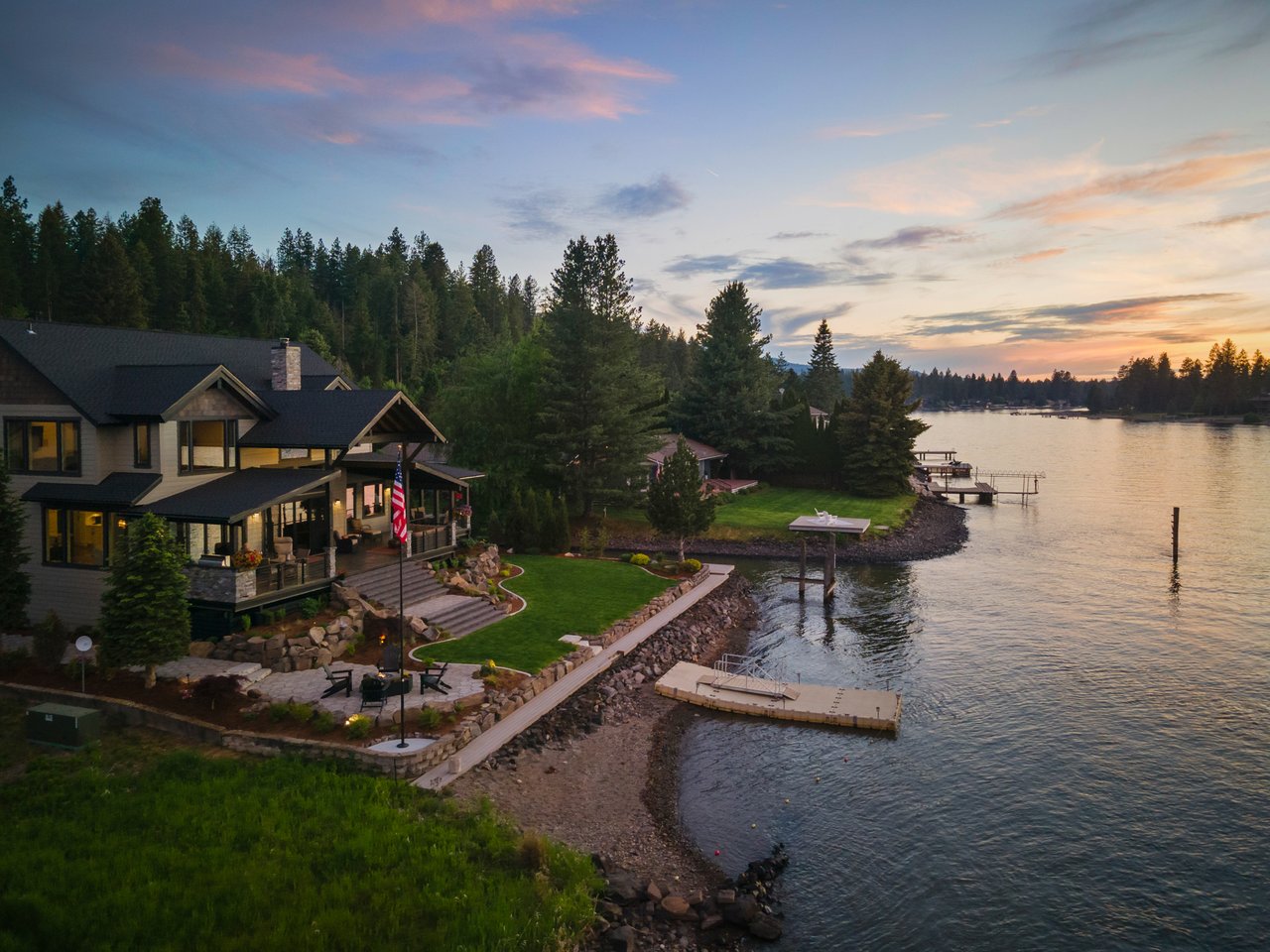
Before buying a Coeur d’Alene waterfront home, verify the shoreline rights, dock authorization, physical condition, year-round access and ownership responsibilities, not just the house. Match those findings to how you intend to use the property, then resolve material questions within the deadlines in your purchase agreement.
Key takeaways
- When comparing Coeur d’Alene waterfront homes for sale, verify water access before valuing the view.
- A dock’s appearance does not establish its permit status or your right to use it.
- Check shoreline access, winter roads, utilities and insurance for the specific property.
- Base your decision on documented rights and inspections, not assumptions about future improvements.
Why this matters
A waterfront purchase includes more than bedrooms, finishes and a lake view. You are also choosing a shoreline, a route to the water and an ongoing set of maintenance responsibilities.
Two attractive homes can offer very different ownership experiences. One has a gentle path to a shared beach; another has private frontage reached by a long stairway. Neither arrangement is automatically better, but they answer different needs.
Start with your priorities before you start comparing photographs. The broader North Idaho home buying FAQ provides additional context for your search. This checklist focuses on the property-specific questions that deserve closer attention at the waterfront.
What should you check before buying a Coeur d’Alene waterfront home?
Use the following sequence to organize your review. Your agent can coordinate the questions, but a surveyor, inspector, insurer, lender, permitting authority or attorney should answer matters within their professional scope.
- Establish what waterfront rights come with the property.
- Verify the dock and other shoreline improvements.
- Walk the actual route from the home to the water.
- Inspect the home, site and utility systems.
- Confirm year-round access and maintenance obligations.
- Review insurance, financing and ongoing ownership needs.
- Compare relevant sales and document unresolved issues.
The view is visible. The rights and responsibilities need verification. Keep a single property file so each finding stays attached to the home it describes.
Establish what waterfront means for this listing
Treat “waterfront,” “lake access” and “lake view” as starting descriptions, not interchangeable promises. Request the underlying documents before assuming that a shoreline, beach or boat slip belongs to the property.
A lakefront parcel can still have restrictions or shared arrangements. A home away from the shoreline can have recorded access rights that serve your needs well. The legal arrangement matters more than the shorthand in the listing.
On a phone, swipe across the table to see all columns.
Arrangement | Best for | What to verify | Main limitation to consider |
|---|---|---|---|
Direct frontage | Buyers who want shoreline adjoining their parcel | Boundaries, permitted improvements and access conditions | Frontage does not establish unrestricted shoreline use |
Shared waterfront access | Buyers comfortable sharing facilities | Recorded rights, rules and maintenance responsibilities | Use is subject to the shared arrangement |
Lake-view property | Buyers who prioritize scenery | Actual access rights, if any | A view does not provide water access |
Ask your title professional to explain recorded easements, covenants and exceptions. If a boundary or access right is unclear, obtain appropriate professional advice rather than relying on an informal description.
Verify the dock, not just its condition
An existing dock is not proof that every part of it is authorized. Request the permit records and compare the documented arrangement with the structure on site, including associated lifts, pilings or other improvements.
The Idaho Department of Lands states that an encroachment permit is required before building a dock, marina or shoreline stabilization on a navigable lake. Its Encroachment Permits guidance, checked October 13, 2026, also identifies assignment materials for buyers and sellers of lakefront property with an existing encroachment.
The department reports that updated encroachment rules took effect July 1, 2026. Confirm the current requirements with the appropriate office for the specific lake and property; an older permit or a seller’s recollection is not a substitute for that review.
Ask for these three document groups:
- The existing permit and approved drawings or descriptions.
- Records covering later changes, repairs or additional structures.
- The assignment requirements applicable to the ownership change.
Keep legal authorization separate from physical inspection. A permit review does not tell you whether boards, supports, electrical components or anchoring are in acceptable condition. Conversely, a well-maintained dock can still have unresolved paperwork.
Do not build your purchase decision around a future dock expansion until the relevant authorities confirm what is feasible. Your preferred boat and the permitted dock arrangement need to work together.
Walk the shoreline as you would actually use it
Aerial photographs cannot tell you how carrying groceries, paddles or boating equipment will feel on the path to the water. Walk the entire route during the showing when conditions allow.
Look at stairs, slopes, retaining features, lighting and the transition onto the dock. Consider the route for your own mobility needs and for anyone who will regularly visit. A striking hillside view can come with a demanding walk.
Record practical measurements instead of describing access as “easy”:
- Count the stair steps between the main living area and the dock.
- Measure the narrowest passage needed for your equipment.
- Record the boat dimensions your dock arrangement must accommodate.
- Identify where equipment will be stored and carried.
These measurements are property-specific, not regional benchmarks. A stair count from one home tells you nothing about another.
Ask about seasonal water conditions and verify answers through suitable records and qualified local professionals. A single showing does not establish water depth or dock usability throughout the year.
Inspect the site alongside the home
A beautiful interior should not distract you from exterior water management. Ask your inspector to assess the home within the scope of the inspection and identify concerns that require a specialist.
Pay attention to roof drainage, grading, crawl spaces or lower levels, decks and visible retaining structures. Request repair documentation when a seller describes a past issue as resolved. Do not treat a fresh finish as evidence that the underlying cause disappeared.
For the property file, separate findings into three categories:
- Items adequately documented or inspected.
- Items requiring a specialist’s evaluation.
- Items still unknown when your decision deadline approaches.
This makes your next action clearer. An unknown is not automatically a defect, but it is not a verified benefit either.
Ask about permits for substantial additions, guest spaces and other improvements relevant to your intended use. Confirm requirements with the applicable local authority; the property’s jurisdiction determines which office should answer.
Confirm water, wastewater and connectivity
Do not assume that every waterfront property uses the same utility systems. Establish whether the home has public water or a private supply, and whether wastewater service is public or on-site.
For a well or septic system, request available records, maintenance history and appropriate inspections. Discuss capacity with the relevant professionals when your planned use differs from the seller’s use. A guest-heavy summer schedule can raise different questions than occasional weekend visits.
If you work remotely, verify internet service at the exact address. Ask the provider about the service available to that home, and arrange a practical test where possible. A nearby property’s connection does not establish yours.
Document:
- The water and wastewater arrangements serving the home.
- Available inspection and maintenance records.
- Access needed to service or repair equipment.
- Current internet options for the address.
- Any shared-system agreements and responsibilities.
Request current provider information rather than relying only on an older listing description. Confirm what transfers with ownership and what requires a new account or agreement.
Evaluate access in every season
A shoreline setting should fit your daily routine as well as your vacation plans. Review the drive from the public road to the home, including slope, turning space and delivery access.
For a private road, request the recorded access documents and any road-maintenance agreement. Find out who arranges snow removal, how responsibilities are allocated and what obligations apply to the buyer. Verbal assurances should lead to documents, not replace them.
If you are viewing during warm weather, ask for dated winter photographs and maintenance records. They can inform your questions, but they do not replace an assessment of your specific driveway and road conditions.
Test essential journeys yourself when possible: groceries, healthcare appointments, work and airport trips. Record the conditions and time of day rather than treating one drive as a permanent travel-time guarantee.
For relocation buyers, Lifestyle North Realty Group’s relocation services include community education, virtual tours and remote buying support. Those services can help organize your search, while specialist inspections remain a separate part of property review.
Review insurance before your decision deadlines
Discuss the exact property with your insurance professional early. Ask about the home, detached structures, waterfront improvements, liability and any coverage limitations relevant to your use.
FEMA’s guidance for real estate and lending professionals, reviewed October 13, 2026, directs users to current flood maps and notes that lenders must inform applicants of applicable flood-insurance requirements. FEMA also explains that most homeowners policies do not cover flood damage.
Check the address, but do not treat a map result as a complete insurance assessment. Ask your insurer and lender what they require and what risks remain outside the proposed coverage. Confirm exclusions and deductibles in the actual policy documents.
A useful ownership worksheet includes insurance, property taxes, utilities, road responsibilities, landscaping and dock maintenance. Obtain property-specific information instead of applying a generic annual percentage to the purchase.
Compare properties on the features that matter
Square footage alone is not enough to compare waterfront homes. Shoreline usability, access arrangements, condition, exposure and permitted improvements can change how two otherwise similar houses serve a buyer.
Ask your agent to explain why each comparable sale is relevant. Separate features you can change from characteristics you cannot readily change, such as the site’s slope or location on the lake.
Lifestyle North Realty Group’s published approach to waterfront valuation distinguishes evidence of value from marketing strategy. The useful buyer lesson is to examine the whole property rather than rely on a broad average or an attractive asking-price narrative.
Keep a short decision sheet for each finalist:
- The features supporting your intended use.
- The limitations you can comfortably accept.
- The questions requiring professional confirmation.
- The work or obligations you would inherit.
A home can be attractive and still be the wrong fit. Honest comparison protects your decision without requiring a prediction about appreciation or future resale results.
Why waterfront ownership varies from property to property
The lake is only part of the comparison. Your ownership experience also depends on:
- The parcel’s slope and shoreline access.
- Private versus shared facilities and recorded rights.
- The condition and authorization of waterfront improvements.
- Road and utility arrangements.
- The home’s condition and maintenance needs.
- Your intended year-round or seasonal use.
These factors explain why the best choice cannot be reduced to a single property label. Prioritize the characteristics that support the life you actually plan to lead.
Frequently asked questions
Does a waterfront home automatically include a private dock?
No. Verify the actual dock arrangement, recorded rights and permit documentation for that property. Direct frontage, shared facilities and an assigned boat slip are different arrangements.
Can I enlarge an existing dock after buying a Coeur d’Alene home?
Do not assume that enlargement is allowed. Ask the Idaho Department of Lands and any other applicable authority about the specific proposal before treating it as a purchase benefit.
Should I inspect a dock separately from the house?
Confirm whether your home inspector’s scope includes the dock, and arrange specialist review where needed. Physical condition and permit status require separate checks.
Is a lake-view home the same as a lake-access home?
No. A lake view describes scenery; lake access depends on the property’s actual rights and arrangements. Request documentation before assuming access is included.
Do I need flood insurance for a waterfront home?
Ask your lender and insurer about the exact property. Review current flood mapping, applicable loan requirements and the coverage you want; waterfront location alone does not settle the question.
Can I buy a waterfront home remotely?
Remote tours can help you evaluate a property, but they do not replace document review or appropriate inspections. Request footage of the access road, stairs, shoreline and utility areas as well as the interior.
What should a seasonal waterfront owner plan for?
Create a property-care plan for periods when the home is unoccupied. Discuss winter preparation, inspections, security and service access with qualified providers and your insurer.
One last thing
Before making your final decision, ask for a walkthrough that starts at the road and ends at the water, rather than one that starts in the kitchen. It makes access and maintenance questions harder to overlook.
For Coeur d’Alene waterfront buyers, Lifestyle North Realty Group provides local guidance and concierge service focused on the whole property. A consultation can help translate your priorities into a clear search brief and a property-specific review plan.
This guide was reviewed October 13, 2026. It provides general buying considerations, not legal, engineering, insurance or lending advice. Verify property details and current requirements with the appropriate professionals and authorities.
Related guides
Official references
- Idaho Department of Lands: encroachment permits. Reviewed October 13, 2026, for navigable-lake improvements and ownership assignment guidance.
- FEMA: understanding flood risk for real estate and lending professionals. Reviewed October 13, 2026, for flood mapping and insurance requirements.